For SEO Services in Shahdara Call +91-9891949380 - Mr. Shad
http://seosmoservicesindelhi.blogspot.in/2015/04/seo-rules-tricks-for-beginners.html

http://seosmoservicesindelhi.blogspot.in/2015/04/seo-rules-tricks-for-beginners.html
SEO Rules & Tricks for Beginners
The ‘Rules’
Google insists webmasters adhere to their ‘rules’ and aims to reward sites with high quality content and remarkable ‘white hat’ web marketing techniques with high rankings. Conversely it also needs to penalise web sites that manage to rank in Google by breaking these rules.
These rules are not laws, only guidelines, for ranking in Google; laid down by Google. You should note that some methods of ranking in Google are, in fact, actually illegal. Hacking, for instance, is illegal.
You can choose to follow and abide by these rules, bend them or ignore them – all with different levels of success (and levels of retribution, from Google’s web spam team). White hats do it by the ‘rules’; black hats ignore the ‘rules’.
What you read in this article is perfectly within the laws and within the guidelines and will help you increase the traffic to your website through organic, or natural search engine results pages (SERPS).
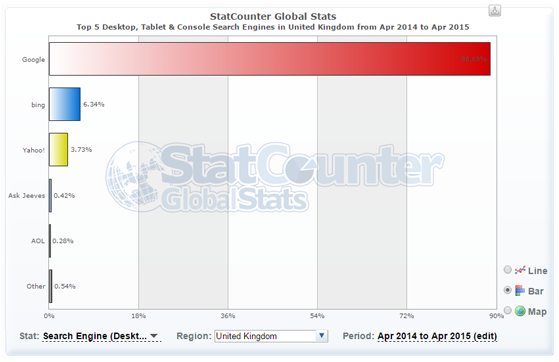
While there are a lot of definitions of SEO (spelled Search engine optimisation in the UK, Australia and New Zealand, or search engine optimization in the United States and Canada) organic SEO in 2015 is mostly about getting free traffic from Google, the most popular search engine in the world (and the only game in town in the UK):
The guide you are reading is for the more technical minded.
Opportunity
The art of web seo is understanding how people search for things, and understanding what type of results Google wants to (or will) display to it’s users. It’s about putting a lot of things together to look for opportunity.
A good optimiser has an understanding of how search engines like Google generate their natural SERPS to satisfy users’ NAVIGATIONAL, INFORMATIONALand TRANSACTIONAL keyword queries.
A good search engine marketer has a good understanding of the short term and long term risks involved in optimising rankings in search engines, and an understanding of the type of content and sites Google (especially) WANTS to return in it’s natural SERPS.
The aim of any campaign is increased visibility in search engines.
There are rules to be followed or ignored, risks to be taken, gains to be made, and battles to be won or lost.
A Mountain View spokesman once called the search engine ‘kingmakers‘, and that’s no lie.
Ranking high in Google is VERY VALUABLE – it’s effectively ‘free advertising’ on the best advertising space in the world.
Traffic from Google natural listings is STILL the most valuable organic traffic to a website in the world, and it can make or break an online business.
The state of play STILL is that you can generate your own highly targeted leads, for FREE, just by improving your website and optimising your content to be as relevant as possible for a customer looking for your company, product or service.
As you can imagine, there’s a LOT of competition now for that free traffic – even from Google (!) in some niches.
The Process
The process can successfully practiced in a bedroom or a workplace, but it has traditionally involved mastering many skills as they arose including diverse marketing technologies including but not limited to:
- website design
- accessibility
- usability
- user experience
- website development
- php, html, css etc
- server management
- domain management
- copywriting
- spreadsheets
- back link analysis
- keyword research
- social media promotion
- software development
- analytics and data analysis
- information architecture
- looking at Google for hours on end
It takes a lot, in 2015, to rank on merit a page in Google in competitive niches, andthe stick Google is hitting every webmaster with (at the moment, and for the foreseeable future) is the ‘QUALITY USER EXPERIENCE‘ stick.
If you expect to rank in Google in 2015, you’d better have a quality offering, not based entirely on manipulation, or old school tactics.
Is a visit to your site a good user experience? If not – beware MANUAL QUALITY RATERS and BEWARE the GOOGLE PANDA algorithm which is looking for signs of poor user experience and low quality content.
Google raising the ‘quality bar’ ensures a higher level of quality in online marketing in general (above the very low quality we’ve seen over the last years).
Success online involves HEAVY INVESTMENT in on page content, website architecture, usability, conversion to optimisation balance, and promotion.
If you don’t take that route, you’ll find yourself chased down by Google’s algorithms at some point in the coming year.
This ‘what is seo’ guide (and this entire website) is not about churn and burn type of Google seo (called webspam to Google).
What Is A Successful Strategy?
Get relevant. Get trusted. Get Popular.
It’s is no longer just about manipulation. It’s about adding quality and often utilitarian content to your website which meet a PURPOSE that delivers USER SATISFACTION.
If you are serious about getting more free traffic from search engines, get ready to invest time and effort into your website and online marketing.
Google wants to rank QUALITY documents in its results, and force those who want to rank high to invest in great content, or great service, that attracts editorial links from other reputable websites.
If you’re willing to add a lot of great content to your website, and create buzz about your company, Google will rank you high. If you try to manipulate Google, it will penalise you for a period of time, and often until you fix the offending issue – which we know can LAST YEARS.
Backlinks in general, for instance, are STILL weighed FAR too positively by Google and they are manipulated to drive a site to the top positions – for a while. That’s why blackhats do it – and they have the business model to do it. It’s the easiest way to rank a site, still today. If you are a real business who intends to build a brand online – you can’t use black hat methods. Full stop.
Google Rankings Are In Constant Ever-Flux
It’s Google’s job to MAKE MANIPULATING SERPS HARD.
So – the people behind the algorithms keeps ‘moving the goalposts’, modifying the ‘rules’ and raising ‘quality standards’ for pages that compete for top ten rankings. In 2015 – we have ever-flux in the SERPS – and that seems to suit Google and keep everybody guessing.
Google is very secretive about its ‘secret sauce’ and offers sometimes helpful and sometimes vague advice – and some say offers misdirection – about how to get more from valuable traffic from Google.
Google is on record as saying the engine is intent on ‘frustrating’ search engine optimisers attempts to improve the amount of high quality traffic to a website – at least (but not limited to) – using low quality strategies classed as web spam.
At its core, Google search engine optimisation is about KEYWORDS and LINKS. It’s about RELEVANCE, REPUTATION and TRUST. It is about QUALITY OF CONTENT & VISITOR SATISFACTION. A Good USER EXPERIENCE is the end goal.
Relevance, Authority & Trust
Web page optimisation is about making a web page being relevant enough for a query, and being trusted enough to rank for it.
It’s about ranking for valuable keywords for the long term, on merit. You can play by ‘white hat’ rules laid down by Google, or you can choose to ignore those and go ‘black hat’ – a ‘spammer’. MOST seo tactics still work, for some time, on some level, depending on who’s doing them, and how the campaign is deployed.
Whichever route you take, know that if Google catches you trying to modify your rank using overtly obvious and manipulative methods, then they will class you a web spammer, and your site will be penalised (normally you will not rank high for important keywords).
These penalties can last years if not addressed, as some penalties expire and some do not – and Google wants you to clean up any violations.
Google does not want you to try and modify your rank. Critics would say Google would prefer you paid them to do that using Google Adwords.
The problem for Google is – ranking high in Google organic listings is a real social proof for a business, a way to avoid ppc costs and still, simply, the BEST WAY to drive REALLY VALUABLE traffic to a site.
It’s FREE, too, once you’ve met the always-increasing criteria it takes to rank top.
In 2015, you need to be aware that what works to improve your rank can also get you penalised (faster, and a lot more noticeably).
In particular, the Google web spam team is currently waging a pr war on sites that rely on unnatural links and other ‘manipulative’ tactics (and handing out severe penalties if it detects them) – and that’s on top of many algorithms already designed to look for other manipulative tactics (like keyword stuffing).
Google is making sure it takes longer to see results from black and white hat seo, and intent on ensuring a flux in it’s SERPS based largely on where the searcher is in the world at the time of the search, and where the business is located near to that searcher.
There are some things you cannot directly influence legitimately to improve your rankings, but there is plenty you CAN do to drive more Google traffic to a web page.
Ranking Factors
Google has HUNDREDS of ranking factors with signals that can change daily to determine how it works out where your page ranks in comparison to other competing pages.
You will not ever find them all. Many ranking factors are on page, on site and some are off page, or off site. Some are based on where you are, or what you have searched for before.
I’ve been in online marketing for 15 years. In that time, I’ve learned to focus on optimising elements in campaigns that offer the greatest return on investment of one’s labour.
Learn SEO Basics….
Here is few simple seo tips to begin with:
- If you are just starting out, don’t think you can fool Google about everything all the time. Google has VERY probably seen your tactics before. So, it’s best to keep your plan simple. GET RELEVANT. GET REPUTABLE. Aim for a good, satisfying visitor experience. If you are just starting out – you may as well learn how to do it within Google’s Webmaster Guidelines first. Make a decision, early, if you are going to follow Google’s guidelines, or not, and stick to it. Don’t be caught in the middle with an important project. Do not always follow the herd.
- If your aim is to deceive visitors from Google, in any way, Google is not your friend. Google is hardly your friend at any rate – but you don’t want it as your enemy. Google will send you lots of free traffic though if you manage to get to the top of search results, so perhaps they are not all that bad.
- A lot of optimisation techniques that are effective in boosting sites rankings in Google are against Google’s guidelines. For example: many links that may have once promoted you to the top of Google, may in fact today be hurting your site and it’s ability to rank high in Google. Keyword stuffing might be holding your page back…. You must be smart, and cautious, when it comes to building links to your site in a manner that Google *hopefully* won’t have too much trouble with in the FUTURE. Because they will punish you in the future.
- Don’t expect to rank number 1 in any niche for a competitive without a lot of investment, work. Don’t expect results overnight. Expecting too much too fast might get you in trouble with the spam team.
- You don’t pay anything to get into Google, Yahoo or Bing natural, or free listings. It’s common for the major search engines to find your website pretty easily by themselves within a few days. This is made so much easier if your website actually ‘pings’ search engines when you update content (via XML sitemaps or RSS for instance).
- To be listed and rank high in Google and other search engines, you really should consider and largely abide by search engine rules and official guidelines for inclusion. With experience, and a lot of observation, you can learn which rules can be bent, and which tactics are short term and perhaps, should be avoided.
- Google ranks websites (relevancy aside for a moment) by the number and quality of incoming links to a site from other websites (amongst hundreds of other metrics). Generally speaking, a link from a page to another page is viewed in Google “eyes” as a vote for that page the link points to. The more votes a page gets, the more trusted a page can become, and the higher Google will rank it – in theory. Rankings are HUGELY affected by how much Google ultimately trusts the DOMAIN the page is on. BACKLINKS (links from other websites – trump every other signal.)
- I’ve always thought if you are serious about ranking – do so with ORIGINAL COPY. It’s clear – search engines reward good content it hasn’t found before. It indexes it blisteringly fast, for a start (within a second, if your website isn’t penalised!). So – make sure each of your pages has enough text content you have written specifically for that page – and you won’t need to jump through hoops to get it ranking.
- If you have original quality content on a site, you also have a chance of generating inbound quality links (IBL). If your content is found on other websites, you will find it hard to get links, and it probably will not rank very well as Google favours diversity in it’s results. If you have decent original content on your site, you can let authority websites, those with online business authority, know about it, and they might link to you – this is called a quality backlink.
- Search engines need to understand a link is a link. Links can be designed to be ignored by search engines with the rel nofollow attribute.
- Search engines can also find your site by other web sites linking to it. You can also submit your site to search engines direct, but I haven’t submitted any site to a search engine in the last 10 years – you probably don’t need to do that. If you have a new site I would immediately register it with Google Webmaster Tools these days.
- Google and Bing use a crawler (Googlebot and Bingbot) that spiders the web looking for new links to spider. These bots might find a link to your home page somewhere on the web and then crawl and index the pages of your site if all your pages are linked together (in almost any way). If your website has an xml sitemap, for instance, Google will use that to include that content in it’s index. An xml site map is INCLUSIVE, not EXCLUSIVE. Google will crawl and index every single page on your site – even pages out with an xml sitemap.
- Many think Google will not allow new websites to rank well for competitive terms until the web address “ages” and acquires “trust” in Google – I think this depends on the quality of the incoming links. Sometimes your site will rank high for a while then disappears for months. A “honeymoon period” to give you a taste of Google traffic, no doubt.
- Google WILL classify your site when it crawls and indexes your site – and this classification can have a DRASTIC affect on your rankings – it’s important for Google to work out WHAT YOUR ULTIMATE INTENT IS – do you want to classified as an affiliate site made ‘just for Google’, a domain holding page, or a small business website with a real purpose? Ensure you don’t confuse Google by being explicit with all the signals you can – to show on your website you are a real business, and your INTENT is genuine – and even more importantly today – FOCUSED ON SATISFYING A VISITOR.
- NOTE – If a page exists only to make money from Google’s free traffic – Google calls this spam. I go into this more, later in this guide.
- The transparency you provide on your website in text and links about who you are, what you do, and how you’re rated on the web or as a business is one way that Google could use (algorithmically and manually) to ‘rate’ your website. Note that Google has a HUGE army of quality raters and at some point they will be on your site if you get a lot of traffic from Google.
- To rank for specific keyword phrase searches, you generally need to have the keyword phrase or highly relevant words on your page (not necessarily altogether, but it helps) or in links pointing to your page/site.
- Ultimately what you need to do to compete is largely dependent on what the competition for the term you are targeting is doing. You’ll need to at least mirror how hard they are competing, if a better opportunity is hard to spot.
- As a result of other quality sites linking to your site, the site now has a certain amount of real PageRank that is shared with all the internal pages that make up your website that will in future help provide a signal to where this page ranks in the future.
- Yes, you need to build links to your site to acquire more PageRank, or Google ‘juice’ – or what we now call domain authority or trust. Google is a links based search engine – it does not quite understand ‘good’ or ‘quality’ content – but it does understand ‘popular’ content. It can also usually identify poor, or THIN CONTENT – and it penalises your site for that – or – at least – it takes away the traffic you once had with an algorithm change. Google doesn’t like calling actions the take a ‘penalty’ – it doesn’t look good. They blame your ranking drops on their engineers getting better at identifying quality content or links, or the inverse – low quality content and unnatural links. If they do take action your site for paid links – they call this a ‘Manual Action’ and you will get notified about it in Webmaster Tools if you sign up.
- Link building is not JUST a numbers game, though. One link from a “trusted authority” site in Google could be all you need to rank high in your niche. Of course, the more “trusted” links you build, the more trust Google will have in your site. It is evident you need MULTIPLE trusted links from MULTIPLE trusted websites to legitimately get the most from Google.
- Try and get links within page text pointing to your site with relevant, or at least natural looking, keywords in the text link – not, for instance, in blogrolls or site wide links. Try to ensure the links are not obviously “machine generated” e.g. site-wide links on forums or directories. Get links from pages, that in turn, have a lot of links to them, and you will soon see benefits.
- Onsite, consider linking to your other pages by linking to them within text. I usually only do this when it is relevant – often, I’ll link to relevant pages when the keyword is in the title elements of both pages. I don’t really go in for auto-generating links at all. Google has penalised sites for using particular auto link plugins, for instance, so I avoid them.
- Linking to a page with actual key-phrases in the link help a great deal in all search engines when you want to feature for specific key-terms. For example; “seo scotland” as opposed to http://www.hobo-web.co.uk or “click here“. Saying that – in 2015, Google is punishing manipulative anchor text very aggressively, so be sensible – and stick to brand links and plain url links that build authority with less risk. I rarely ever optimise for grammatically incorrect terms these days (especially links).
- I think the anchor text links in internal navigation is still valuable – but keep it natural. Google needs links to find and help categorise your pages. Don’t underestimate the value of a clever internal link keyword-rich architecture and be sure to understand for instance how many words Google counts in a link, but don’t overdo it. Too many links on a page could be seen as a poor user experience. Avoid lots of hidden links in your template navigation.
- Search engines like Google ‘spider’ or ‘crawl’ your entire site by following all the links on your site to new pages, much as a human would click on the links of your pages. Google will crawl and index your pages, and within a few days normally, begin to return your pages in SERPS.
- After a while, Google will know about your pages, and keep the ones it deems ‘useful’ – pages with original content, or pages with a lot of links to them. The rest will be de-indexed. Be careful – too many low quality pages on your site will impact your overall site performance in Google. Google is on record talking about good and bad ratios of quality content to low quality content.
- Ideally you will have unique pages, with unique page titles and unique page descriptions if you deem to use the latter. Google does not seem to use the meta description when actually ranking your page for specific keyword searches if not relevant and unless you are careful if you might end up just giving spammers free original text for their site and not yours once they scrape your descriptions and put the text in main content on their site. I don’t worry about meta keywords these days as Google and Bing say they either ignore them or use them as spam signals.
- Google will take some time to analyse your entire site, analysing text content and links. This process is taking longer and longer these days but is ultimately determined by your domain authority / real PageRank as Google determines it.
- If you have a lot of duplicate low quality text already found by Googlebot on other websites it knows about, Google will ignore your page. If your site or page has spammy signals, Google will penalise it, sooner or later. If you have lots of these pages on your site – Google will ignore your efforts.
- You don’t need to keyword stuff your text and look dyslexic to beat the competition.
- You optimise a page for more traffic by increasing the frequency of the desired key phrase, related key terms, co-occurring keywords and synonyms in links, page titles and text content. There is no ideal amount of text – no magic keyword density. Keyword stuffing is a tricky business, too, these days.
- I prefer to make sure I have as many UNIQUE relevant words on the page that make up as many relevant long tail queries as possible.
- If you link out to irrelevant sites, Google may ignore the page, too – but again, it depends on the site in question. Who you link to, or HOW you link to, REALLY DOES MATTER – I expect Google to use your linking practices as a potential means by which to classify your site. Affiliate sites for example don’t do well in Google these days without some good quality backlinks.
- Many search engine marketers think who you actually link out to (and who links to you) helps determine a topical community of sites in any field, or a hub of authority. Quite simply, you want to be in that hub, at the centre if possible (however unlikely), but at least in it. I like to think of this one as a good thing to remember in the future as search engines get even better at determining topical relevancy of pages, but I have never really seen any granular ranking benefit (for the page in question) from linking out.
- I’ve got by, by thinking external links to other sites should probably be on single pages deeper in your site architecture, with the pages receiving all your Google Juice once it’s been “soaked up” by the higher pages in your site structure (the home page, your category pages). This is old school though – but it still gets me by. I don’t need to think you really need to worry about that in 2015.
- Original content is king and will attract a “natural link growth” – in Google’s opinion. Too many incoming links too fast might devalue your site, but again. I usually err on the safe side – I always aimed for massive diversity in my links – to make them look ‘more natural’. Honestly, I go for natural links in 2015 full stop.
- Google can devalue whole sites, individual pages, template generated links and individual links if Google deems them “unnecessary” and a ‘poor user experience’.
- Google knows who links to you, the “quality” of those links, and whom you link to. These – and other factors – help ultimately determine where a page on your site ranks. To make it more confusing – the page that ranks on your site might not be the page you want to rank, or even the page that determines your rankings for this term. Once Google has worked out your domain authority – sometimes it seems that the most relevant page on your site Google HAS NO ISSUE with will rank.
- Google decides which pages on your site are important or most relevant. You can help Google by linking to your important pages and ensuring at least one page is really well optimised amongst the rest of your pages for your desired key phrase. Always remember Google does not want to rank ‘thin’ pages in results – any page you want to rank – should have all the things Google is looking for. PS – That’s a lot these days!
- It is important you spread all that real ‘PageRank’ – or link equity – to your sales keyword / phrase rich sales pages, and as much remains to the rest of the site pages, so Google does not ‘demote’ pages into oblivion – or ‘supplemental results’ as we old timers knew them back in the day. Again – this is slightly old school – but it gets me by even today.
- Consider linking to important pages on your site from your home page, and other important pages on your site.
- Focus on RELEVANCE first. Then, focus your marketing efforts and get REPUTABLE. This is the key to ranking ‘legitimately’ in Google in 2015.
- Every few months Google changes it’s algorithm to punish sloppy optimisation or industrial manipulation. Google Panda and Google Penguin are two such updates, but the important thing is to understand Google changes its algorithms constantly to control its listings pages (over 600 changes a year we are told).
- The art of rank modification is to rank without tripping these algorithms or getting flagged by a human reviewer – and that is tricky!
Welcome to the tightrope that is modern web optimisation.
Read on if you would like to learn how to seo….
Keyword Research is ESSENTIAL
The first step in any professional campaign is to do some keyword research and analysis.
Somebody asked me about this a simple white hat tactic and I think what is probably the simplest thing anyone can do that guarantees results.
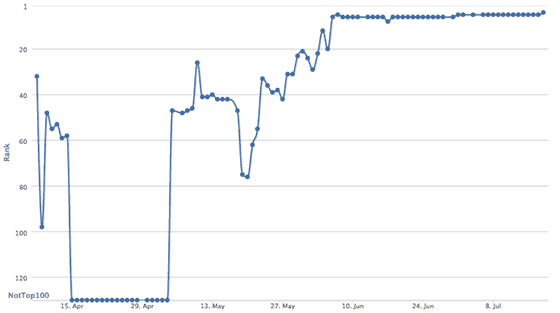
The chart above (from last year) illustrates a reasonably valuable 4 word term I noticed a page I had didn’t rank high in Google for, but I thought probably should and could rank for, with this simple technique.
I thought it as simple as an example to illustrate an aspect of onpage seo, or ‘rank modification’, that’s white hat, 100% Google friendly and never, ever going to cause you a problem with Google. This ‘trick’ works with any keyword phrase, on any site, with obvious differing results based on availability of competing pages in SERPS, and availability of content on your site.
The keyword phrase I am testing rankings for isn’t ON the page, and I did NOT add the key phrase…. or in incoming links, or using any technical tricks like redirects or any hidden technique, but as you can see from the chart, rankings seem to be going in the right direction.
You can profit from it if you know a little about how Google works (or seems to work, in many observations, over years, excluding when Google throws you a bone on synonyms. You can’t ever be 100% certain you know how Google works on any level, unless it’s data showing your wrong, of course.)
What did I do to rank number 1 from nowhere for that key phrase?
I added one keyword to to the page in plain text, because adding the actual ‘keyword phrase’ itself would have made my text read a bit keyword stuffed for other variations of the main term. It gets interesting if you do that to a lot of pages, and a lot of keyword phrases. The important thing is keyword research – and knowing which unique keywords to add.
This illustrates a key to ‘relevance’ is…. a keyword. The right keyword.
Yes – plenty of other things can be happening at the same time. It’s hard to identify EXACTLY why Google ranks pages all the time…but you can COUNT on other things happening and just get on with what you can see works for you.
In a time of light optimisation, it’s useful to earn a few terms you SHOULD rank for in simple ways that leave others wondering how you got it.
Of course you can still keyword stuff a page, or still spam your link profile – but it is ‘light’ optimisation I am genuinely interested in testing on this site – how to get more with less – I think that’s the key to not tripping Google’s aggressive algorithms.
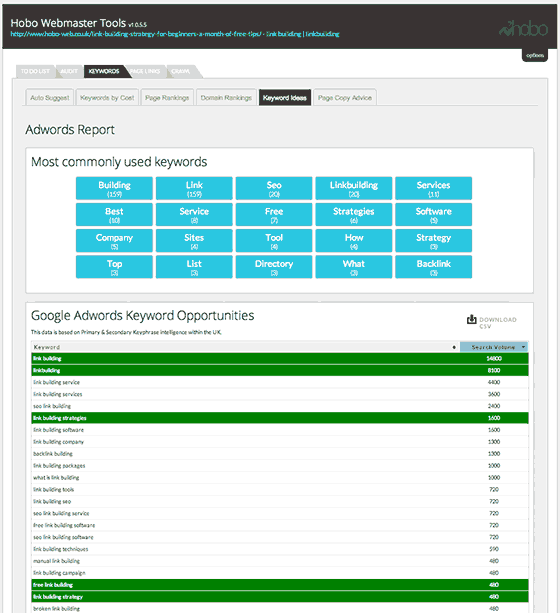
There are many tools on the web to help with basic keyword research (including the Google Keyword Planner tool and there are even more useful third party seo toolsto help you do this).
You can use many keyword research tools to quickly identify opportunities to get more traffic to a page:
Google Analytics Keyword ‘Not Provided’
Google Analytics was the very best place to look at keyword opportunity for some (especially older) sites, but that all changed a few years back.
Google stopped telling us which keywords are sending traffic to our sites from the search engine back in October 2011, as part of privacy concerns for it’s users.


 DISCOVER SEVERAL WAYS TO IMPROVE YOUR WEBSITE NAVIGATION: